Return — The Final Weighing
The final Scale is not an ending. It is how you return.
Aritu are sacred gateways or thresholds of passage. Within Dhyani Love's living framework, each Aritu invites a man to confront, align and embody a principle before moving forward.
Historical Record
The weighing of the heart is described in Chapter 125 of the Book of the Dead and illustrated in many surviving papyri, the Papyrus of Ani in the British Museum being the best known. The scene shows a balance: the heart of the deceased on one side, the feather of Ma'at on the other.
Accompanying the scene is a declaration in which the deceased states that they have not committed a long list of wrongs — that they have lived in accordance with Ma'at. The emphasis of the text is on affirmation of a life rightly lived rather than on punishment.
A person whose life is found to be in alignment is described with the epithet usually translated “true of voice” or “justified”, a phrase that appears constantly beside personal names in Egyptian funerary material. It is a statement about vindication and standing, not a threat.
Read as an image rather than a doctrine, the scene asks a single question about a whole life: does what this person actually did stand in balance with truth? That is the question this library carries forward.
Participants in the Seven Scales of Ma'at are not reenacting an ancient ceremony. No such ceremony is documented, and none is being reconstructed. The Return is a contemporary experience shaped by Dhyani Love and inspired by this image.
Living Reflection
Anything can be sustained for a week in an unusual place. The Nile helps, the fire helps, the other men help. The measure of the work is what survives contact with a wet Tuesday in your own kitchen.
Integration is unglamorous by design. It looks like answering your mother's call. Like the apology you have owed a colleague since March. Like not opening the argument you always open. Like being in the room with your children rather than adjacent to them with a phone.
Returning differently often means returning quieter. Men who come back announcing their transformation usually have not had one. The people who live with you will not be interested in your insights; they will be watching whether you are easier to live with.
Choosing what to leave behind is as real as choosing what to carry. Some habits, some grudges, some versions of yourself that were useful once and are now just heavy. Naming them specifically is what makes leaving them possible.
Repair, where it is safe and appropriate, belongs here. Not grand reconciliations — one honest sentence, delivered without a performance, and then the patience to let it be received slowly.
Dhyani's Transmission
The seventh Aritu is crown, and it is the one men most often misunderstand. They expect an arrival. What actually happens is a handover.
The Return is proven by how you live when the ceremony is over.
Everything you have touched across the six Scales — truth, heart, fire, word, hands, sight — now has to survive ordinary life. Your family will not weigh your ceremony. They will weigh your patience on a Thursday evening.
So carry back less than you think. One truth. One repair. One thing set down for good. That is a Return.
— Dhyani Love
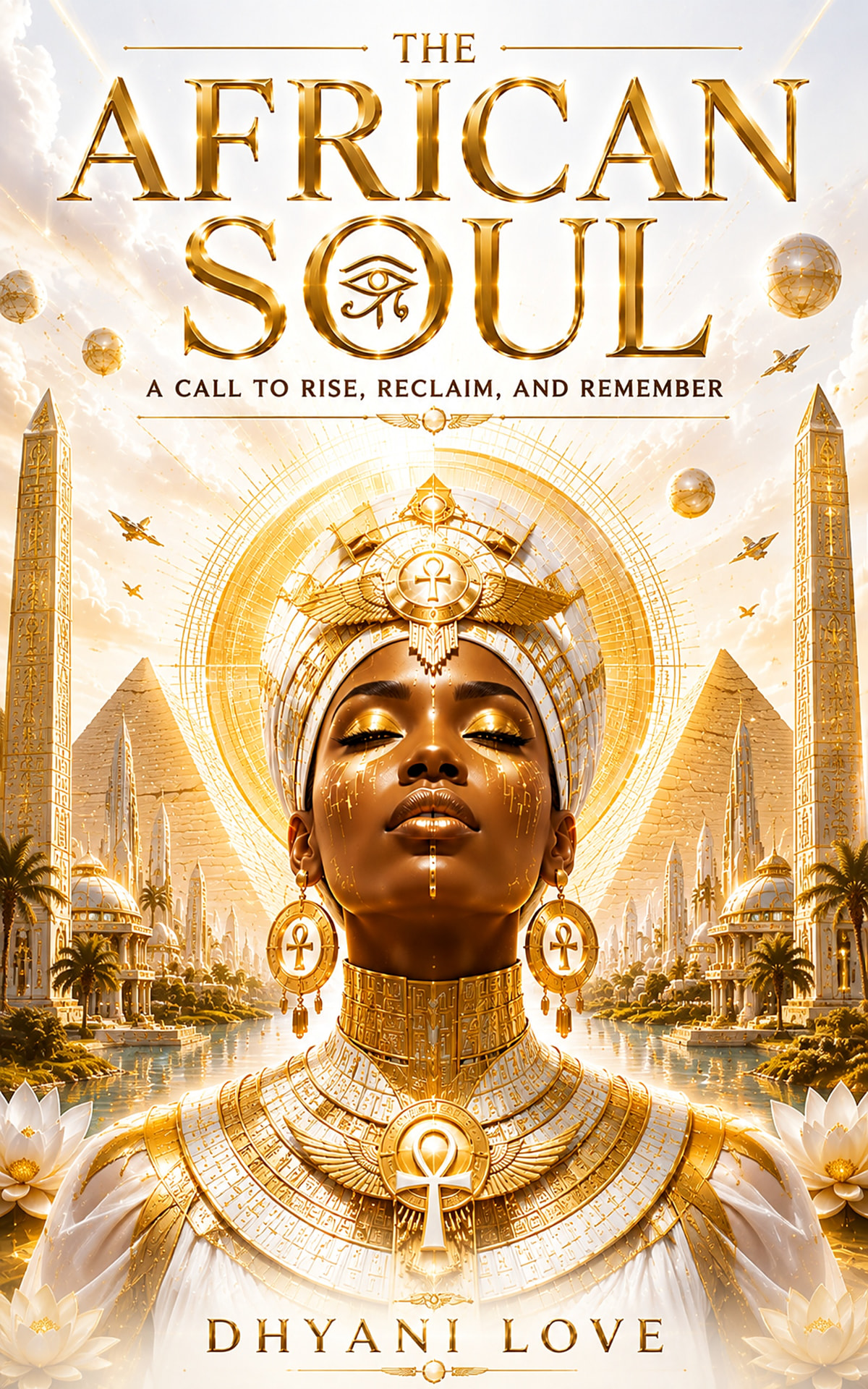
The African Soul: A Call to Rise, Reclaim, and Remember
The book behind the teaching — a call to rise, reclaim and remember.
Get the BookAvailable on Amazon and Kindle Unlimited.
Three Questions for Reflection
- What is the one thing you are carrying back that must survive an ordinary week?
- What are you leaving behind, named specifically enough that you would notice picking it up again?
- Who will feel the difference first, and what will they actually see you doing differently?
One Practice
The Letter for Thirty Days
Write a short letter to yourself, to be opened in thirty days. Name one thing you are carrying back into your life and one thing you are setting down. Be specific enough that your future self can tell whether it happened. Seal it, put a date on it, and put it somewhere you will find it. If you would rather speak than write, say one commitment aloud to a person you trust. This is a commitment, never a confrontation.
This practice is for quiet, private reflection. If anything here brings up more than you can carry alone, speak with someone you trust or a qualified professional. The library is knowledge, not treatment.
Sources and further reading
- The British Museum collection online — Book of the Dead of Ani (Papyrus of Ani, EA 10470)
- R. O. Faulkner (trans.), The Ancient Egyptian Book of the Dead — Chapter 125
- John H. Taylor, Journey through the Afterlife: Ancient Egyptian Book of the Dead
- Jan Assmann, Death and Salvation in Ancient Egypt
- UCLA Encyclopedia of Egyptology — peer-reviewed articles on Egyptian religion, language and funerary belief
Dhyani's Transmission is her own teaching and carries no external source. See also her book The African Soul: A Call to Rise, Reclaim, and Remember.
Return to the Seven Scales Library · Explore the Men's Return
Experience The Seven Scales of Ma'at
The library offers the knowledge. The Return offers the lived journey.
Men's Return · 11–18 November 2026 · Heisa Island, Aswan, Kemet (Egypt) · Maximum 10 men
The Seven Gates Knowledge Library offers spiritual education, reflection and personal practices. It does not provide medical diagnosis, psychological treatment, legal advice or guaranteed outcomes. Spiritual support should work alongside—not replace—appropriate professional care. You remain the authority over your choices, body and beliefs.