Ka and Ba — Body and Soul Aligned
A divided man spends his life fighting himself.
Aritu are sacred gateways or thresholds of passage. Within Dhyani Love's living framework, each Aritu invites a man to confront, align and embody a principle before moving forward.
Historical Record
Ka and ba are two aspects of the person in ancient Egyptian thought. The ka is generally described as a vital essence or life-force, understood as coming into being with the person and as being sustained after death through offerings — which is why offering formulae and funerary provision matter so much in the record.
The ba is usually described as the aspect associated with personality and individuality, and as able to move between the tomb and the wider world. It is depicted as a bird with a human head, and that image is one of the most recognisable in Egyptian funerary art.
Egyptian thought did not stop at two aspects. Scholars also discuss the akh — the transfigured, effective form of the dead — along with the body, the name and the shadow. The person was understood as composite in a way that has no neat modern equivalent.
This matters for translation. “Body” and “soul” are convenient modern approximations that do not capture the ancient meanings, and rendering ka as “body” and ba as “soul” flattens both. This library uses the pairing as a contemporary image of inner and outer life, and states plainly that the ancient concepts were something else.
Living Reflection
Division is expensive. Maintaining a public version of yourself that the private version does not recognise takes constant, low-level effort, and the cost usually shows up as tiredness long before it shows up as crisis.
Most men are not living a lie. They are living several partial truths that never meet: the man at work, the man with his father, the man with his children, the man alone in the car. Each is real. The problem is not multiplicity — it is when they cannot be in the same room.
Sight is the association here because this Scale is about seeing clearly rather than doing more. Where do your outward life and inner life agree? Where do they pull apart? Not the whole architecture — one specific place.
The roles a man holds are not competitors. Father, lover, leader, son, friend, and whatever his spiritual life amounts to — these can be brought into relationship rather than kept in separate compartments. Integrity is not intensity; it is the same man showing up in each room.
This does not mean disclosing everything everywhere. Discretion is not division. The test is simpler: would the man within recognise the man being shown, and would he be able to live with him?
Dhyani's Transmission
The sixth Aritu is sight, and by this point in the work most men are no longer asking what is wrong. They are seeing where they are split.
Alignment begins when the man within no longer has to hide from the man the world sees.
I have watched men carry the exhaustion of that split for decades and call it stress. It is not stress. It is the cost of being two men in one body and paying for both.
You do not close the gap in one movement. You find one place — one relationship, one habit, one room — where the outer life and the inner life do not agree, and you move them one step closer. Then you notice how much energy comes back.
— Dhyani Love
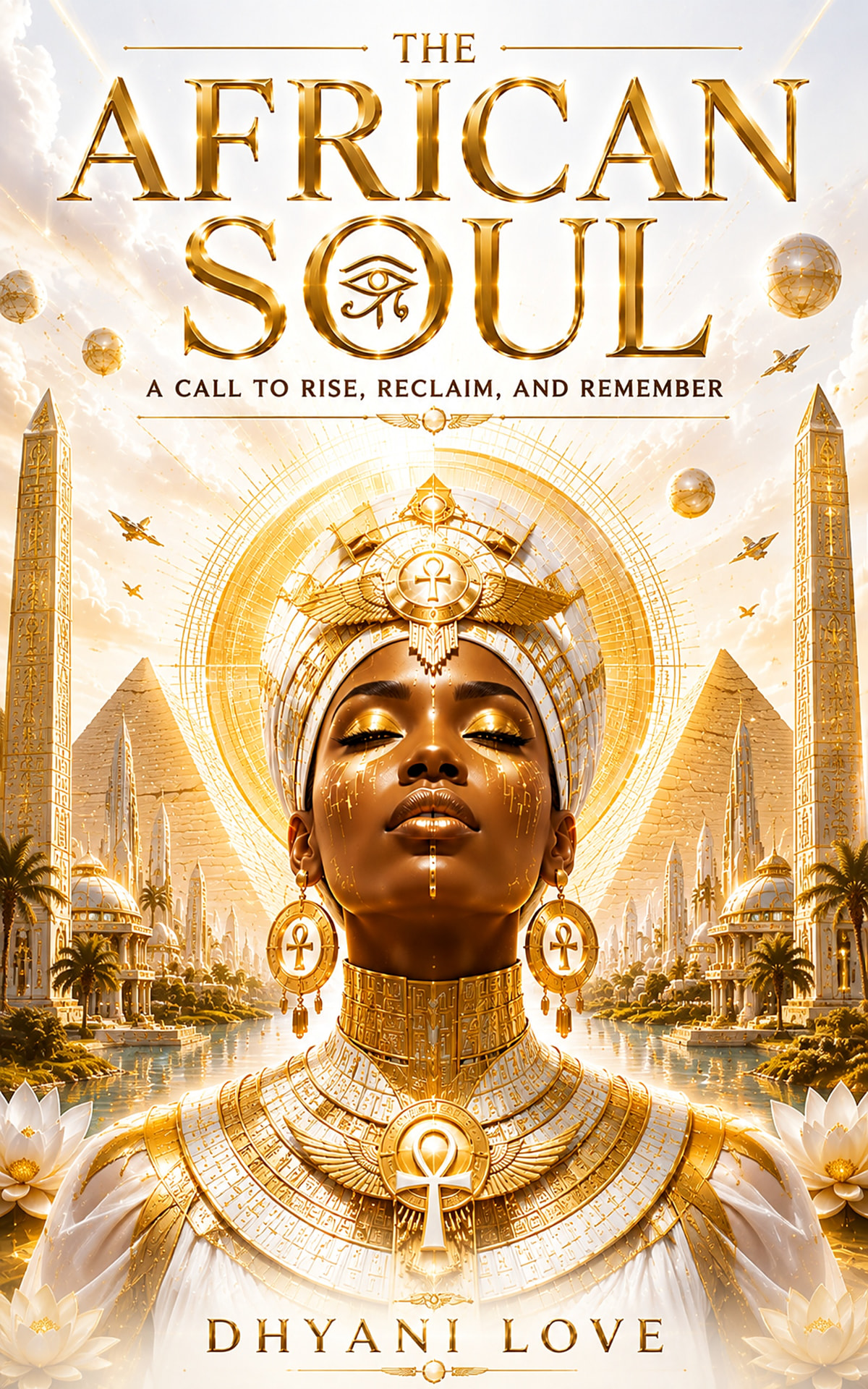
The African Soul: A Call to Rise, Reclaim, and Remember
The book behind the teaching — a call to rise, reclaim and remember.
Get the BookAvailable on Amazon and Kindle Unlimited.
Three Questions for Reflection
- In which room of your life is the gap between the man you show and the man within the widest?
- Which of your roles — father, partner, leader, son, friend — has not been allowed to know the others?
- What are you spending to maintain a version of yourself that you do not actually want to be?
One Practice
The Walking Reflection
Walk slowly for twenty to thirty minutes, without music, a podcast or a destination. As you walk, hold one question: where does my outward life agree with my inner life, and where does it pull apart? Do not solve anything while walking. When you return, write a few lines naming one specific place where you will bring the two closer, and what the first step is.
This practice is for quiet, private reflection. If anything here brings up more than you can carry alone, speak with someone you trust or a qualified professional. The library is knowledge, not treatment.
Sources and further reading
- James P. Allen, Middle Egyptian: An Introduction to the Language and Culture of Hieroglyphs
- John H. Taylor, Journey through the Afterlife: Ancient Egyptian Book of the Dead
- Jan Assmann, Death and Salvation in Ancient Egypt
- UCLA Encyclopedia of Egyptology — peer-reviewed articles on Egyptian religion, language and funerary belief
- The British Museum collection online — Book of the Dead of Ani (Papyrus of Ani, EA 10470)
Dhyani's Transmission is her own teaching and carries no external source. See also her book The African Soul: A Call to Rise, Reclaim, and Remember.
Return to the Seven Scales Library · Explore the Men's Return
Experience The Seven Scales of Ma'at
The library offers the knowledge. The Return offers the lived journey.
Men's Return · 11–18 November 2026 · Heisa Island, Aswan, Kemet (Egypt) · Maximum 10 men
The Seven Gates Knowledge Library offers spiritual education, reflection and personal practices. It does not provide medical diagnosis, psychological treatment, legal advice or guaranteed outcomes. Spiritual support should work alongside—not replace—appropriate professional care. You remain the authority over your choices, body and beliefs.