Ab — The Heart
What is not acknowledged becomes weight.
Aritu are sacred gateways or thresholds of passage. Within Dhyani Love's living framework, each Aritu invites a man to confront, align and embody a principle before moving forward.
Historical Record
The Egyptian word for the heart is usually transliterated ib or jb. Older publications, including much popular writing, render it “ab”. The transliteration varies between systems and periods, and this library uses “Ab” as the familiar form while noting that ib/jb is the standard Egyptological rendering.
In Egyptian understandings of the person, the heart was far more than an organ of feeling. It was treated as the seat of thought, memory, intention, judgement and moral character — closer to what modern English calls conscience or mind than to sentiment. Texts speak of a man following his heart, being guided by his heart, or having a heart that knows what he has done.
Because the heart held the record of a life, it was treated with particular care in funerary practice. Heart scarabs were inscribed with a funerary text — Chapter 30B of the Book of the Dead — addressing the heart directly and asking it not to stand as a witness against its owner at the weighing. The tone of that text is striking: it assumes the heart remembers everything.
Beyond that, this page makes no claim about Egyptian medicine or anatomy. The point drawn here is a matter of language and belief, not physiology.
Living Reflection
Men are rarely short of feeling. They are short of places to put it. Grief that was never spoken does not evaporate; it settles, and it starts to shape decisions from underneath — the short temper, the flat afternoons, the sudden distance from people who have done nothing wrong.
This Scale is not asking for a performance of vulnerability. It is asking for accuracy. There is a real difference between being ruled by every passing emotion and knowing what you are actually carrying. The first is chaos; the second is responsibility.
Much of what men carry in silence is carried out of care — protecting a family from worry, keeping a workplace steady, not becoming the man who complains. That instinct is not weakness or fault. But protection that never gets set down becomes weight, and weight that is never named eventually leaks out sideways.
Openness does not cost a man his dignity. Naming something plainly — to yourself, to one trusted person — is not collapse. It is the ordinary discipline of not asking your body to store what your mouth refuses to say.
Dhyani's Transmission
The second Aritu is waters, because water shows you what is under the surface without argument. Sit beside it long enough and something surfaces.
The heart does not become lighter by pretending it carries nothing.
I have met many men who could describe their work in detail and could not describe a single thing they were carrying. Not because they were hiding. Because no one had ever asked, and they had stopped asking themselves.
You do not have to open everything at this threshold. Name one thing. Say it once. That is enough to change what your heart has to hold alone.
— Dhyani Love
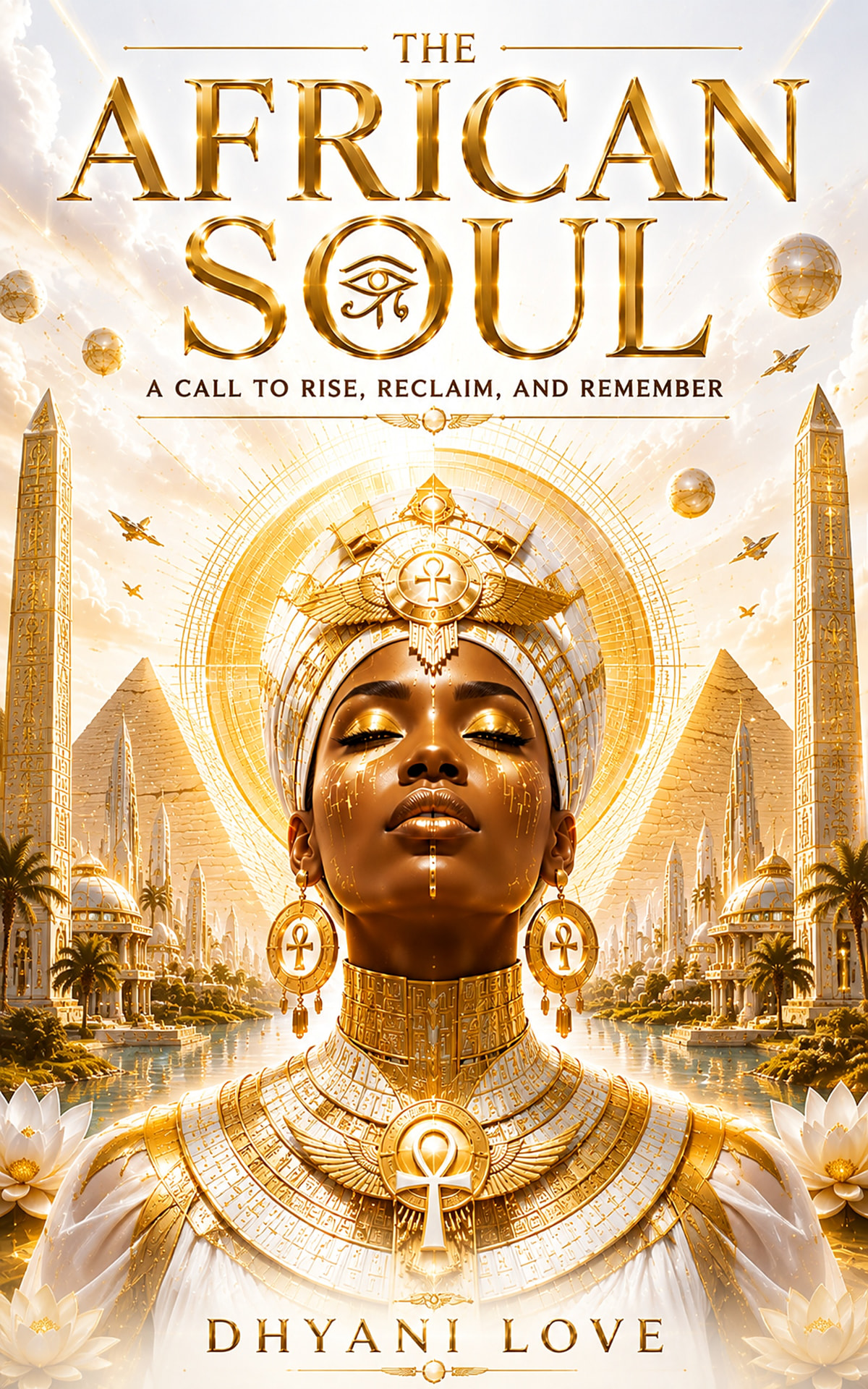
The African Soul: A Call to Rise, Reclaim, and Remember
The book behind the teaching — a call to rise, reclaim and remember.
Get the BookAvailable on Amazon and Kindle Unlimited.
Three Questions for Reflection
- What loss have you never spoken about out loud, and who taught you that it should stay quiet?
- What are you protecting other people from, and what is it costing you to keep protecting them?
- When you imagine naming one thing plainly to someone you trust, what do you fear would change?
One Practice
Ten Minutes Beside Water
Sit beside water for ten quiet minutes — a river, the sea, a canal, a pond, or simply a bowl of water on the table in front of you. Do not go into the water. Let your attention settle, and then name one thing your heart has been carrying: silently, or written in a notebook. One thing only. When the ten minutes are done, pour the water out or walk away without adding anything else.
This practice is for quiet, private reflection. If anything here brings up more than you can carry alone, speak with someone you trust or a qualified professional. The library is knowledge, not treatment.
Sources and further reading
- The British Museum collection online — Book of the Dead of Ani (Papyrus of Ani, EA 10470)
- UCLA Encyclopedia of Egyptology — peer-reviewed articles on Egyptian religion, language and funerary belief
- R. O. Faulkner (trans.), The Ancient Egyptian Book of the Dead — Chapter 30B
- John H. Taylor, Journey through the Afterlife: Ancient Egyptian Book of the Dead
- James P. Allen, Middle Egyptian: An Introduction to the Language and Culture of Hieroglyphs
Dhyani's Transmission is her own teaching and carries no external source. See also her book The African Soul: A Call to Rise, Reclaim, and Remember.
Return to the Seven Scales Library · Explore the Men's Return
Experience The Seven Scales of Ma'at
The library offers the knowledge. The Return offers the lived journey.
Men's Return · 11–18 November 2026 · Heisa Island, Aswan, Kemet (Egypt) · Maximum 10 men
The Seven Gates Knowledge Library offers spiritual education, reflection and personal practices. It does not provide medical diagnosis, psychological treatment, legal advice or guaranteed outcomes. Spiritual support should work alongside—not replace—appropriate professional care. You remain the authority over your choices, body and beliefs.