Sekhem — Sovereign Power
True power does not need constant performance.
Aritu are sacred gateways or thresholds of passage. Within Dhyani Love's living framework, each Aritu invites a man to confront, align and embody a principle before moving forward.
Historical Record
Sekhem (sḫm) is an attested Egyptian word carrying senses of power, might, authority and effective force. As a verb it is generally translated “to have power over” or “to prevail”. Standard reference works such as Faulkner's Concise Dictionary of Middle Egyptian and Allen's Middle Egyptian record this range.
The root appears in divine and royal contexts. The name of the goddess Sekhmet derives from it and is usually rendered “she who is powerful”. A sekhem sceptre was carried and depicted as an emblem of authority, and the word appears in titles and epithets where the sense is closer to effective, exercised power than to raw force.
Translation here is genuinely uncertain at the edges. “Sovereign power” is one reasonable rendering among several; the sense of the word shifts by context, and no single English phrase carries all of it. Where this library uses “Sovereign Power”, it is a working translation chosen for the framework, not a fixed equivalence.
Nothing in the record describes a seven-stage men's initiation using this word. The Scale is Dhyani Love's contemporary construction drawing on an attested concept.
Living Reflection
Domination is loud because it is unsure. It needs the room to confirm it, and it needs confirming again tomorrow. Real authority is quieter, not because it is modest by temperament, but because it does not depend on the reaction of others to exist.
Fire is the right image for this Scale because fire is not the problem. Anger is information. It tells a man that something he values has been crossed. The trouble begins when fire has no hearth — no discipline, no direction, no decision about what it is for.
Self-command is the practical work here: the gap between feeling the surge and choosing the response. That gap can be widened. Not by suppressing anything, but by noticing earlier, and by being honest about what is actually at stake in the moment you feel the pull to prove something.
Every man has influence somewhere — over a child, a team, a partner, a younger brother, a group of friends. Influence is not neutral. It shapes what other people believe is possible or permitted. Holding power well means accepting that you are already affecting people, and asking whether that effect is one you would defend out loud.
Protection belongs here too. Strength that protects is not the same as strength that controls, though the two can look alike from the outside and can feel alike from the inside. The difference is whether the other person becomes more free or less.
Dhyani's Transmission
The third Aritu is fire. I do not ask men to put their fire out. A man without fire is not peaceful; he is absent, and the people around him feel it.
The man who cannot govern his own fire will eventually be governed by it.
What I ask is whether you are the one holding it. Most of the damage I have seen men do was not done by strong men. It was done by men whose fire was driving and who were sitting in the passenger seat, telling themselves they had chosen the direction.
Power you have to keep demonstrating is not yet yours. When it is yours, you can put it down for an afternoon and it will still be there when you return.
— Dhyani Love
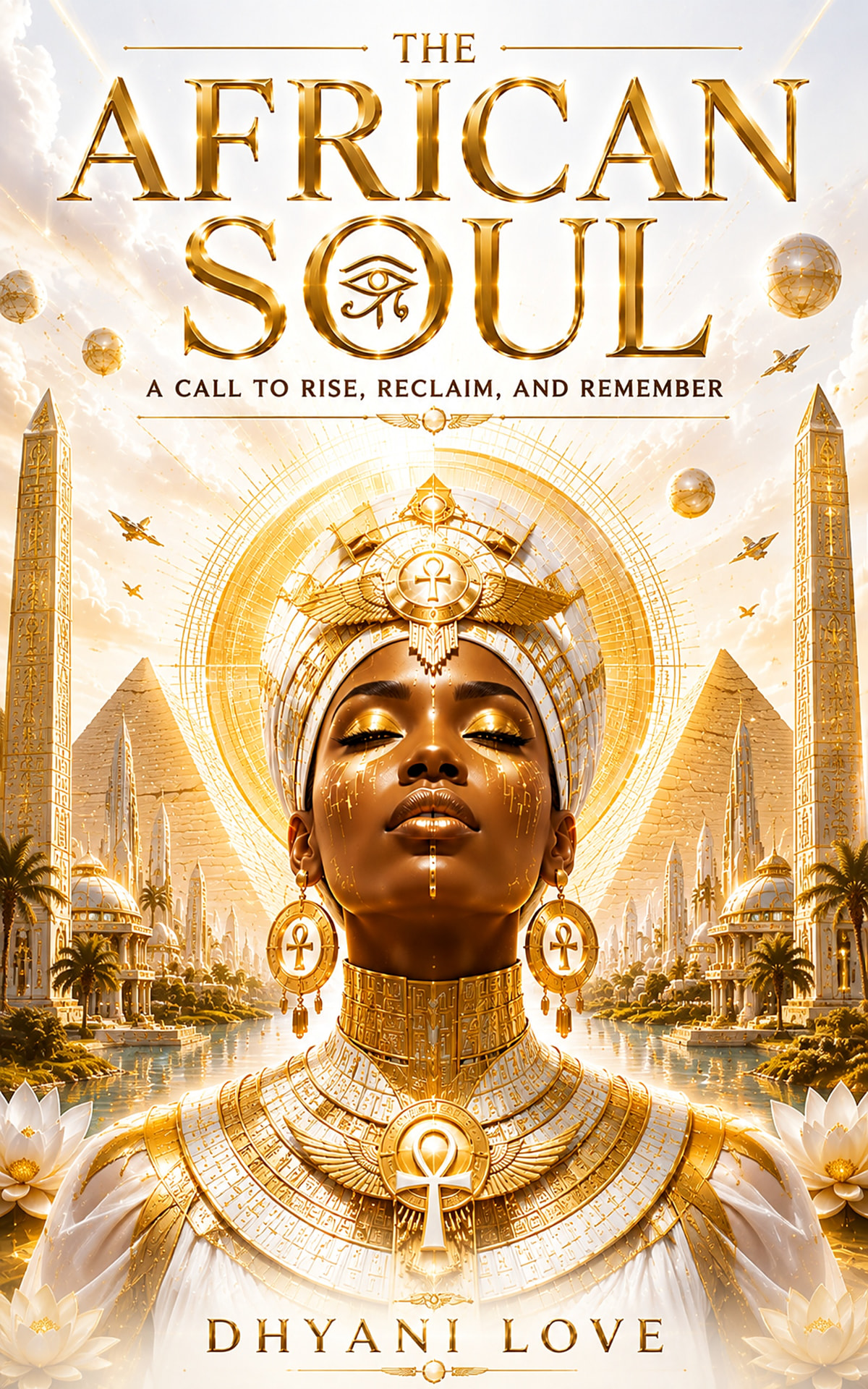
The African Soul: A Call to Rise, Reclaim, and Remember
The book behind the teaching — a call to rise, reclaim and remember.
Get the BookAvailable on Amazon and Kindle Unlimited.
Three Questions for Reflection
- Where in your life are you still proving something, and to whom?
- When your anger last spoke first, what was actually at stake underneath it?
- Who is affected by your influence in ways you have never stopped to consider?
One Practice
One Day of Watching the Pull
For one full day, watch for every moment you feel the pull to prove something — in a conversation, an email, a car, a room. Do not change anything. Just note it, briefly, and write down what was actually at stake. At the end of the day, read the list. If it is useful, add one ordinary pause: before responding in a heated moment, take a few slow, normal breaths and let the moment be one second longer than it wants to be.
This practice is for quiet, private reflection. If anything here brings up more than you can carry alone, speak with someone you trust or a qualified professional. The library is knowledge, not treatment.
Sources and further reading
- R. O. Faulkner, A Concise Dictionary of Middle Egyptian
- James P. Allen, Middle Egyptian: An Introduction to the Language and Culture of Hieroglyphs
- UCLA Encyclopedia of Egyptology — peer-reviewed articles on Egyptian religion, language and funerary belief
- The British Museum collection online — Book of the Dead of Ani (Papyrus of Ani, EA 10470)
Dhyani's Transmission is her own teaching and carries no external source. See also her book The African Soul: A Call to Rise, Reclaim, and Remember.
Return to the Seven Scales Library · Explore the Men's Return
Experience The Seven Scales of Ma'at
The library offers the knowledge. The Return offers the lived journey.
Men's Return · 11–18 November 2026 · Heisa Island, Aswan, Kemet (Egypt) · Maximum 10 men
The Seven Gates Knowledge Library offers spiritual education, reflection and personal practices. It does not provide medical diagnosis, psychological treatment, legal advice or guaranteed outcomes. Spiritual support should work alongside—not replace—appropriate professional care. You remain the authority over your choices, body and beliefs.