Heka — Sacred Word
Every word places something into the world.
Aritu are sacred gateways or thresholds of passage. Within Dhyani Love's living framework, each Aritu invites a man to confront, align and embody a principle before moving forward.
Historical Record
Heka (ḥkꜣ) is an Egyptian concept usually translated “magic”, though Egyptologists consistently stress that the English word misleads. Heka was not fringe sorcery. It was understood as a creative, effective power present in the world from the beginning, available to gods, kings and, in ordinary life, to physicians and ritual practitioners.
Heka is also personified as a deity. In the Coffin Texts — passage 261 is the standard example cited — Heka speaks in the first person as a power existing before creation was completed. This personification sits alongside the more general sense of heka as effective force.
The concept is bound up with authoritative speech. Utterance, when made correctly and by the right person, was understood to be effective: naming, commanding and reciting were actions, not descriptions. This is why heka appears across medical papyri, temple ritual and royal ideology rather than in a separate category of superstition.
Robert Ritner's The Mechanics of Ancient Egyptian Magical Practice and Geraldine Pinch's Magic in Ancient Egypt are the standard scholarly treatments, and both argue against reading heka as fantasy magic.
The use of Heka as the fourth Scale of a men's framework of integrity in speech is Dhyani Love's contemporary interpretation, not an ancient practice.
Living Reflection
A man's word is one of the few things he controls completely. Circumstances change, work changes, health changes. Whether what you said matches what you then did is entirely yours.
Careless promises do more damage than most men realise, because the damage is cumulative and quiet. Nobody confronts you about the third cancelled Saturday. They simply stop expecting. By the time you notice, you have been reclassified in someone's mind — usually a child's — from someone reliable to someone who means well.
Clarity is part of this too. Vagueness is often kindness in intention and confusion in effect. “We'll see”, “probably”, “soon” — these protect the speaker and leave the other person managing uncertainty on your behalf. A clear no is more respectful than a soft maybe.
Silence belongs to this Scale as much as speech. Not the silence of withholding or punishment, but the discipline of not filling every gap — of letting a thought finish forming before it becomes a sentence someone else has to live with.
Speech is an act. It puts something into the world that was not there before, and it cannot be fully retrieved. That is the whole teaching, and it does not require any belief in magic to be true.
Dhyani's Transmission
The fourth Aritu is voice. I watch what men promise, and then I watch what they do, and the distance between those two things tells me more than any conversation about their beliefs.
Your word becomes sacred when your actions no longer contradict it.
You do not restore the weight of your word by making a bigger promise. You restore it by making a smaller one and keeping it. Then another. Weight is rebuilt in units nobody applauds.
Where you have broken your word and it is safe and right to repair it, repair it plainly, without a speech. Where it is not safe or not yours to reopen, let the repair be in how you speak from now on.
— Dhyani Love
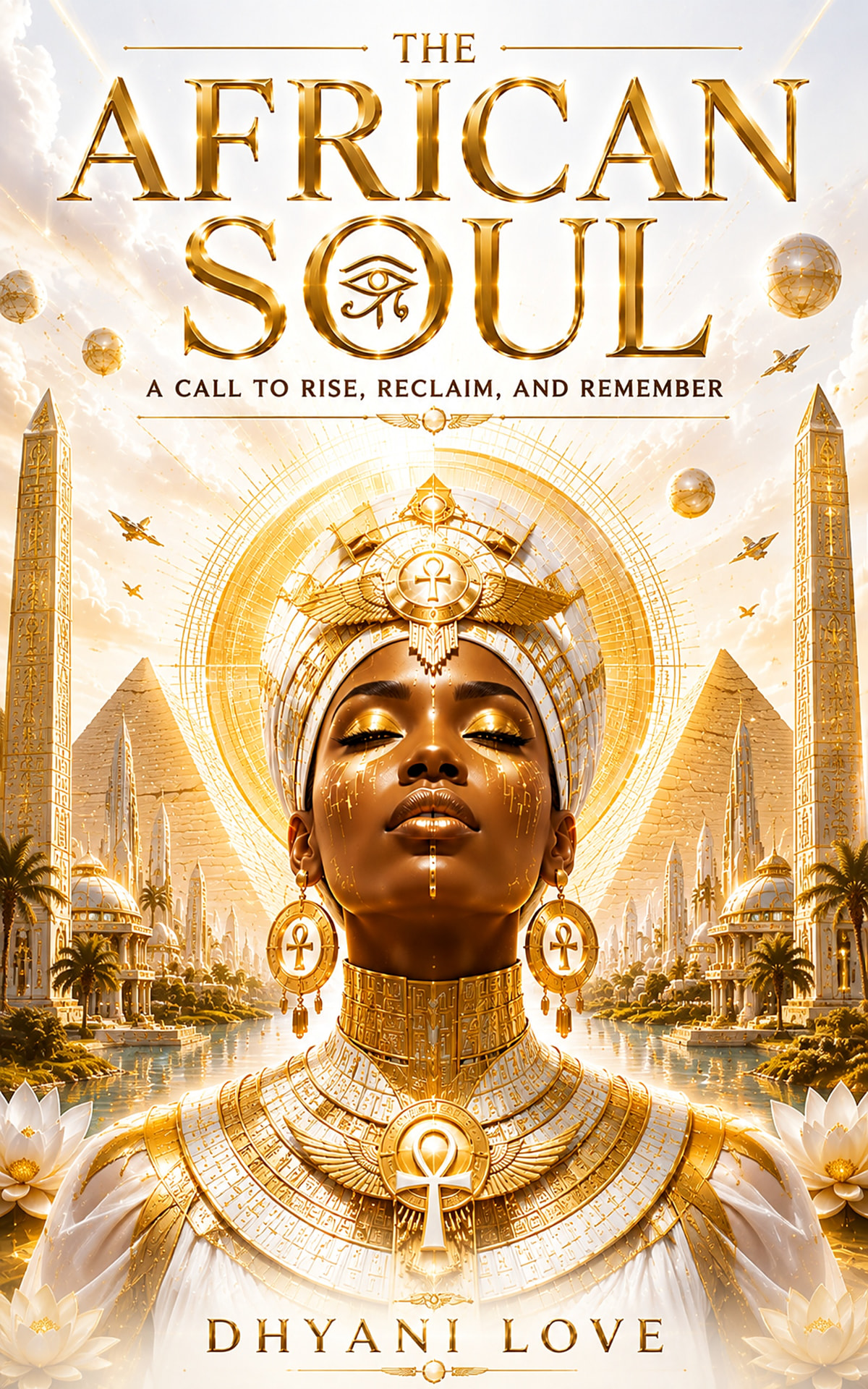
The African Soul: A Call to Rise, Reclaim, and Remember
The book behind the teaching — a call to rise, reclaim and remember.
Get the BookAvailable on Amazon and Kindle Unlimited.
Three Questions for Reflection
- Which promise have you repeated most often and kept least?
- Where are you being vague because clarity would cost you something?
- What would you say less of, if you accepted that every word places something into the world?
One Practice
One Commitment, Spoken Aloud
Choose one commitment — small, specific and genuinely keepable within seven days. Say it aloud, alone, in one plain sentence with a day attached to it. Then keep it. If you would rather repair something, choose one unkept promise that is safe and appropriate to put right, and put it right quietly. Do not use this practice to confront anyone.
This practice is for quiet, private reflection. If anything here brings up more than you can carry alone, speak with someone you trust or a qualified professional. The library is knowledge, not treatment.
Sources and further reading
- Robert K. Ritner, The Mechanics of Ancient Egyptian Magical Practice (ISAC/Oriental Institute, University of Chicago)
- Geraldine Pinch, Magic in Ancient Egypt
- R. O. Faulkner (trans.), The Ancient Egyptian Coffin Texts — passage 261
- UCLA Encyclopedia of Egyptology — peer-reviewed articles on Egyptian religion, language and funerary belief
Dhyani's Transmission is her own teaching and carries no external source. See also her book The African Soul: A Call to Rise, Reclaim, and Remember.
Return to the Seven Scales Library · Explore the Men's Return
Experience The Seven Scales of Ma'at
The library offers the knowledge. The Return offers the lived journey.
Men's Return · 11–18 November 2026 · Heisa Island, Aswan, Kemet (Egypt) · Maximum 10 men
The Seven Gates Knowledge Library offers spiritual education, reflection and personal practices. It does not provide medical diagnosis, psychological treatment, legal advice or guaranteed outcomes. Spiritual support should work alongside—not replace—appropriate professional care. You remain the authority over your choices, body and beliefs.