Shesep — Strength and Service
Strength reveals itself through what it protects and serves.
Aritu are sacred gateways or thresholds of passage. Within Dhyani Love's living framework, each Aritu invites a man to confront, align and embody a principle before moving forward.
Historical Record
This page requires an honest statement before anything else. “Strength and Service” is the meaning assigned to this Scale within Dhyani Love's living framework. It is not a translation of the Egyptian word.
The attested senses of šsp in Egyptological reference works are different. They include “to receive”, “to accept” or “to take up”; a unit of measurement, the palm or handbreadth; and a range of meanings around light, brightness or shining. The related form šspw is used for a statue or sphinx image.
Two of those senses sit naturally beside the Hands association of this Scale — receiving, and the handbreadth as a measure taken from the human hand — and this library draws on that resonance deliberately. But resonance is not etymology. There is no reliable evidence that šsp means “strength and service” in ancient Egyptian, and this library does not claim that it does.
The wider historical context that does support the theme of this Scale is not linguistic but social: Egyptian tomb autobiographies and wisdom literature repeatedly measure a life by what a person did for others — giving bread to the hungry, clothes to the naked, and protecting those without protection. That is documented, and it is the honest historical ground for a Scale about strength in service.
Living Reflection
Strength without an object drifts into control. A man with capacity and nothing worth spending it on will find something to manage, and the people nearest him usually become the project.
The question is not whether you are strong. Most men are stronger than they credit themselves for, in ways that never show on a scoreboard: keeping a job they dislike, holding a household together, absorbing pressure so someone else does not have to feel it. The question is what that strength is aimed at.
Service has its own failure mode. Self-erasure looks like generosity and behaves like resentment about four years later. A man who gives until there is nothing left has not served anyone well; he has simply delayed the bill. Real service is sustainable, chosen and boundaried.
Hands are the honest image here. Not gestures, not statements — repairing, carrying, cooking, building, fixing, showing up with the van. Communities are held together by unglamorous physical contribution, and men are often good at exactly this and strangely reluctant to count it.
Humility at this Scale is not self-diminishment. It is the willingness to do useful work that nobody will attribute to you, and to be fine with that.
Dhyani's Transmission
The fifth Aritu is hands. I do not measure a man by what he says he values. I look at where his hands actually go in a week.
A strong man is not measured by how many people serve him, but by what becomes safer, steadier and more whole because he was present.
There is a particular kind of man who is admired everywhere and useful nowhere. He is not a villain. He has simply never been asked what his strength is for, and no one has told him that the question matters.
Do one thing this week with your hands, for someone who cannot easily repay it, and do not tell anyone. Notice what happens in you. That is the teaching of this Scale, and it does not need explaining.
— Dhyani Love
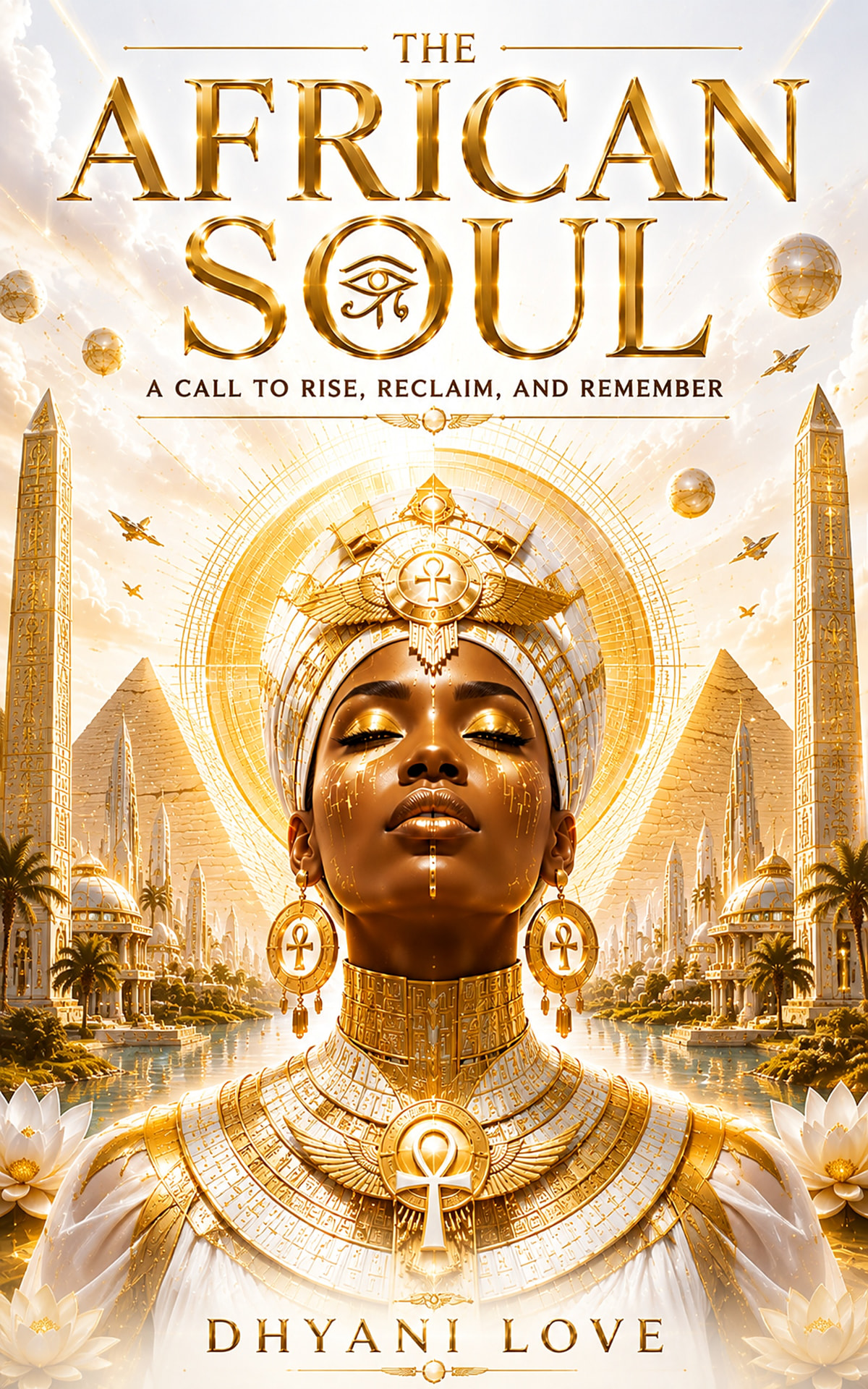
The African Soul: A Call to Rise, Reclaim, and Remember
The book behind the teaching — a call to rise, reclaim and remember.
Get the BookAvailable on Amazon and Kindle Unlimited.
Three Questions for Reflection
- If someone tracked where your energy actually went last week, what would they say your strength serves?
- Where have you given until it turned into resentment, and what boundary was missing?
- What useful thing could you do that no one would ever know you had done?
One Practice
One Act, Unannounced
Complete one act of service this week using your hands — repair something, build something, carry something, cook for someone, fix what has been broken for months. Choose something real rather than symbolic. Do not photograph it, mention it or arrange for it to be noticed. When it is done, notice what is different in you, and leave it at that.
Sources and further reading
- R. O. Faulkner, A Concise Dictionary of Middle Egyptian — attested senses of šsp
- James P. Allen, Middle Egyptian: An Introduction to the Language and Culture of Hieroglyphs
- Miriam Lichtheim, Ancient Egyptian Literature — tomb autobiographies and wisdom texts on care for others
- UCLA Encyclopedia of Egyptology — peer-reviewed articles on Egyptian religion, language and funerary belief
Dhyani's Transmission is her own teaching and carries no external source. See also her book The African Soul: A Call to Rise, Reclaim, and Remember.
Return to the Seven Scales Library · Explore the Men's Return
Experience The Seven Scales of Ma'at
The library offers the knowledge. The Return offers the lived journey.
Men's Return · 11–18 November 2026 · Heisa Island, Aswan, Kemet (Egypt) · Maximum 10 men
The Seven Gates Knowledge Library offers spiritual education, reflection and personal practices. It does not provide medical diagnosis, psychological treatment, legal advice or guaranteed outcomes. Spiritual support should work alongside—not replace—appropriate professional care. You remain the authority over your choices, body and beliefs.